Home › Services › Fiber-Cement Siding
Fiber-cement is cement, sand and cellulose pressed into a plank that looks like painted wood lap and behaves like neither. It does not rot, does not burn, does not soften in the August sun, and does not carry vinyl's wind-pressure question. It is also heavy, costs more, and depends entirely on how it is cut, flashed and fastened. This page is about the details, because in a humid county the details are the product.
Manufacturers require the plank to stop clear of the roof, the ground and any horizontal surface, and a flashing behind every butt joint. Plank sitting in roof runoff on a porch is how fiber-cement fails here.
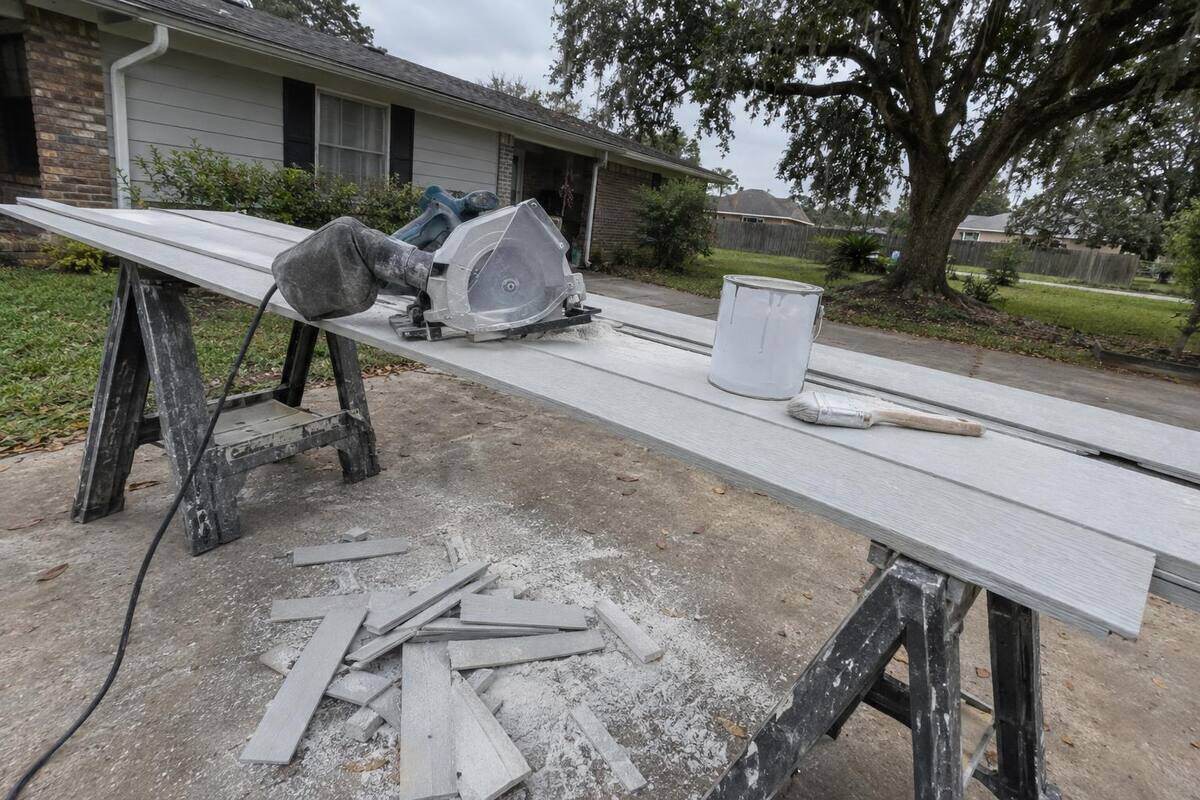
Every cut end is primed before it goes up. A crew that skips it leaves an edge that drinks Gulf humidity for years.
Blind-nailed to the manufacturer's schedule, and in Jefferson County to the windstorm specification's cladding attachment rules as well. Face-nailed at the bottom course only, and only where required.
House wrap, flashed openings, sound sheathing. On a 1950s pier-and-beam house that is a separate line in the scope and often the larger one.
As a range, fiber-cement runs about half again to twice the installed price of vinyl on the same house, and the difference is labor, flashing detail and paint. Against that it is expected to last decades and is the closest match to the original lap siding on the older houses along Calder Avenue and in Port Neches. It is the material for the house you plan to keep. For the rental or the house being made sound on a tight budget, the vinyl page is written without condescension.
James Hardie is the name most people know, and the manufacturer certifies installers; ask whether the contractor holds that certification, since the material warranty can depend on it. Other manufacturers make comparable plank. The brand is less important than the crew.
Applies in Beaumont, Port Arthur, Nederland, Port Neches and Groves. In Vidor, Orange, Bridge City and Lumberton there is no windstorm inspection requirement; see those city pages.
TWIA's list of improvements requiring a Certificate of Compliance includes “re-siding a significant portion of an exterior wall.” In Jefferson County a full fiber-cement re-side is therefore built to TDI's adopted specifications and inspected by a TDI-appointed inspector or a Texas-licensed engineer before TDI issues the certificate. The contractor builds to the specification and expects the inspector; the contractor does not certify anything. See the certificate page.
It comes pre-primed or pre-finished. Pre-finished costs more up front and skips the first paint job; primed needs painting after installation and again every ten to fifteen years in this climate.
No. It is heavier than vinyl but the wall carries it without difficulty. What the old house needs is sound sheathing to fasten into, which is a wall-preparation question.
If you are keeping the house and can carry the cost, fiber-cement. If the budget decides, properly installed vinyl is a sound wall. Either way the wall preparation is the job.
Ask for the flashing and clearance details in writing. A contractor who installs fiber-cement across Jefferson County calls back.
Call (409) 248-2181 Request a Free Estimate Beaumont Roofing